By Neil Lal, Chairman & President, Indian Council of Scotland and the United Kingdom
On 22 April 2025, a terrorist attack in Pahalgam, Kashmir, killed 26 tourists. The shock was immediate and global. For Indian communities across the United Kingdom, it was visceral — these were our people, visiting our ancestral lands.
In the days that followed, I watched something familiar begin to unfold: the early signs of community tension, fed by outrage, social media, and the very human desire to direct grief somewhere.
I had seen this before. In Leicester in 2022. In Birmingham. And each time, I had learned the same lesson: the window for effective dialogue is short, and silence is not neutral.
Acting Immediately
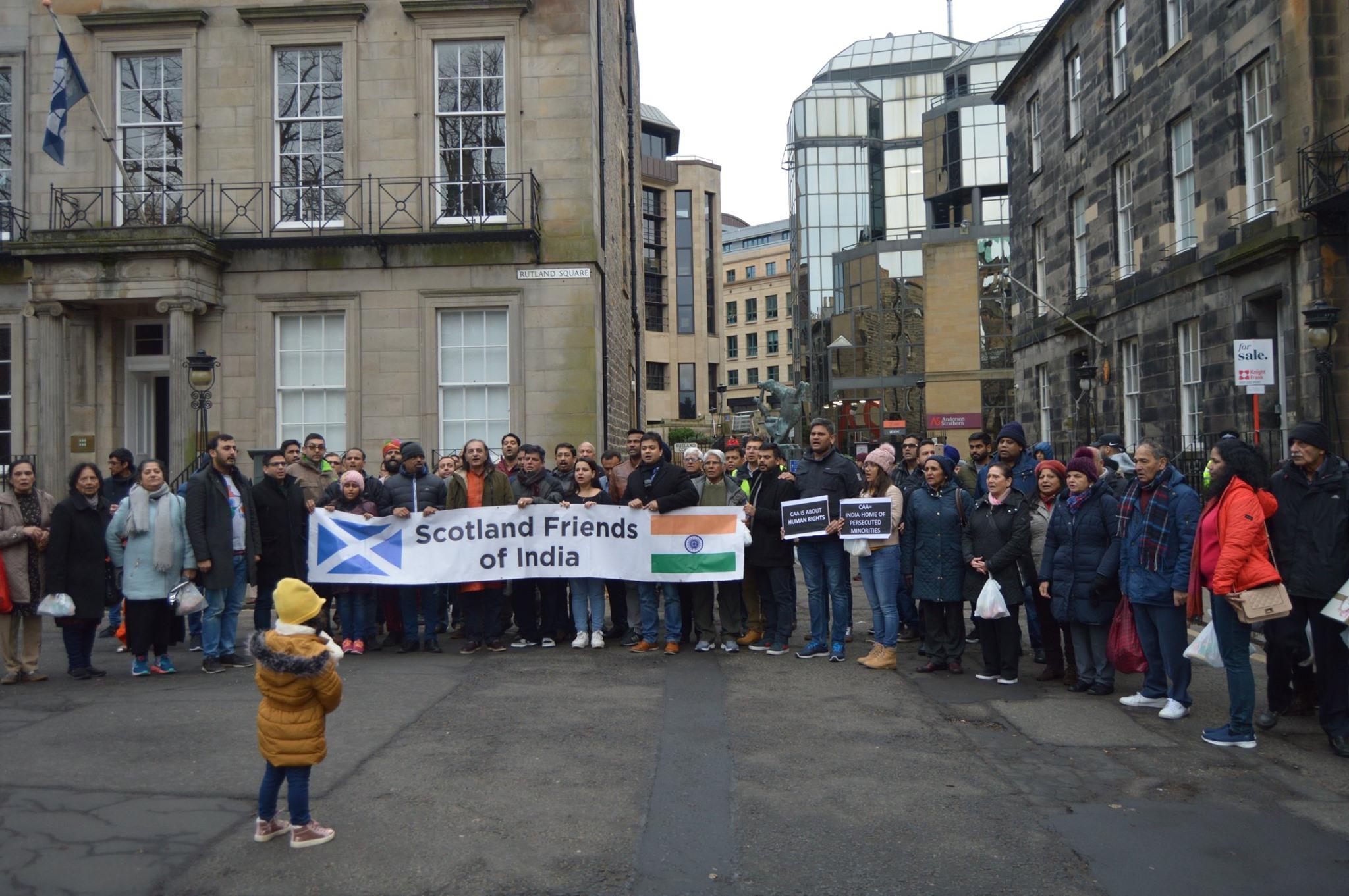
Within 48 hours of the attack, I began a tour of community gatherings — from Glasgow to Edinburgh to London. The message I carried was not political. It was human.
I said: we are angry, and that anger is legitimate. But anger directed at our neighbours — at Muslims, at Pakistanis born in Britain, at people who share our streets and our schools — is not justice. It is a mistake we cannot afford to make.
The response was not uniform. Some people were not ready to hear it. But many were. And the community leaders — mosque committees, gurdwara trustees, Hindu sabhas — were, almost without exception, willing to talk.
What Dialogue Actually Looks Like
People sometimes imagine diplomacy as formal meetings in rooms with flags. Most real diplomacy happens in community centres at 8 o'clock in the evening, over tea, with people who are frightened and furious.
In those conversations, I learned:
- Most tensions are based on anticipated conflict, not actual conflict.
- Once people feel heard — genuinely heard, not managed — they can usually hear the other side.
- Community leaders have enormous influence, but they need cover. They need someone with credibility to say, publicly, that dialogue is not weakness.
Violence is not a solution and diplomacy works.
I have said that many times. I believe it. And in the weeks after Pahalgam, I saw evidence that it is true.
Scotland Was Different — But Not Immune
Scotland has a stronger tradition of cross-community cooperation than many parts of England. The Indian, Pakistani, and Bangladeshi communities here have, in many cases, built decades of shared civic life.
But Scotland was not immune to the tension. I received messages from community members — young men, particularly — who were frightened and angry in equal measure. The pull toward confrontation was real.
We held joint vigils. We made joint statements. We invited Muslim community leaders to stand alongside Hindu and Sikh leaders and say, together: not in our name, not in our streets.
It worked. Not perfectly, not permanently — these tensions do not disappear. But Scotland's communities came through the worst period without the violence that erupted in parts of England.
The Leicester Lesson
I want to be direct about what I learned in Leicester in 2022, because it informs everything I do now.
In the aftermath of the India-Pakistan cricket match in August 2022, violent clashes broke out in Leicester. Hindu and Muslim communities clashed on streets. Tensions spread to Birmingham. I visited multiple times, meeting with community leaders, local councillors, police liaisons.
The pattern was consistent: the violence was not organic. It was seeded, amplified, and in some cases organised by actors with interest in division. Social media played a central role. And local leaders — both Hindu and Muslim — were often the last to know what was happening on their own streets.
The lesson: you cannot wait for violence to start before beginning dialogue. The conversation must be ongoing, persistent, and rooted in genuine relationship — not crisis management.
A Broader Point About Britain
The United Kingdom is home to the world's most successful Indian diaspora. Two million people. A community that has contributed immeasurably to British society — in business, in medicine, in law, in culture, in politics.
That community is also, at moments of crisis, a pressure point. When tensions rise between India and Pakistan, between Hindu and Muslim communities, between nationalist sentiment and diaspora identity — the UK feels it.
My role, as Chairman of the Indian Council of Scotland and UK, is partly to represent this community to government. But it is equally to represent the best of this community to itself.
The best of this community is not anger or grievance. It is the extraordinary capacity for coexistence that has been built, over decades, by ordinary people making the choice to be neighbours.
That choice must be renewed. Constantly.
Neil Lal is Chairman & President of the Indian Council of Scotland and the United Kingdom. He has been involved in community mediation efforts following the Leicester 2022 tensions and the 2025 Pahalgam crisis response across Glasgow, Edinburgh, and London.